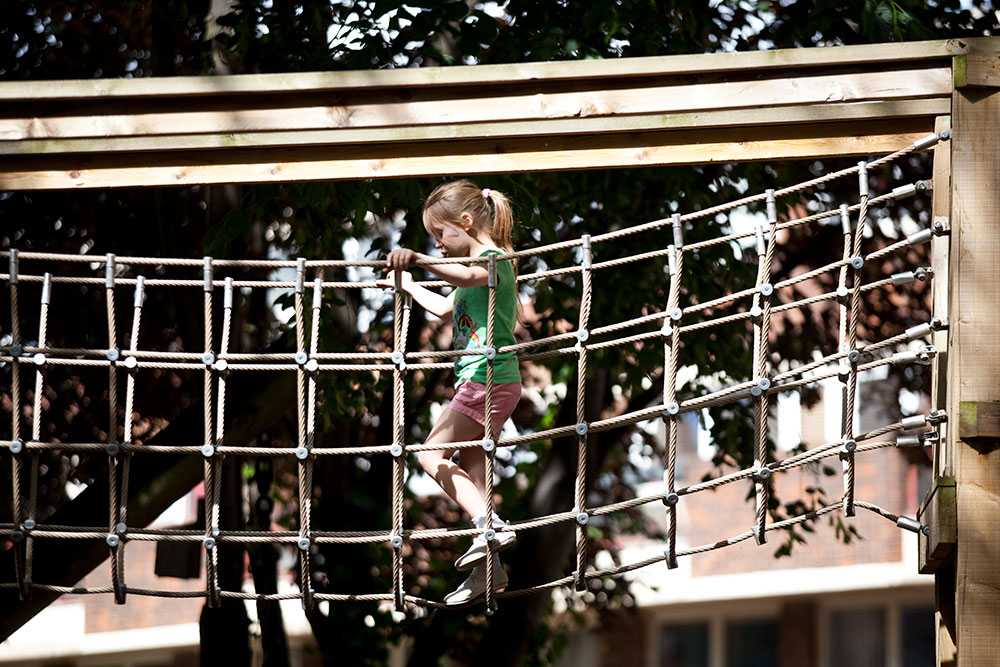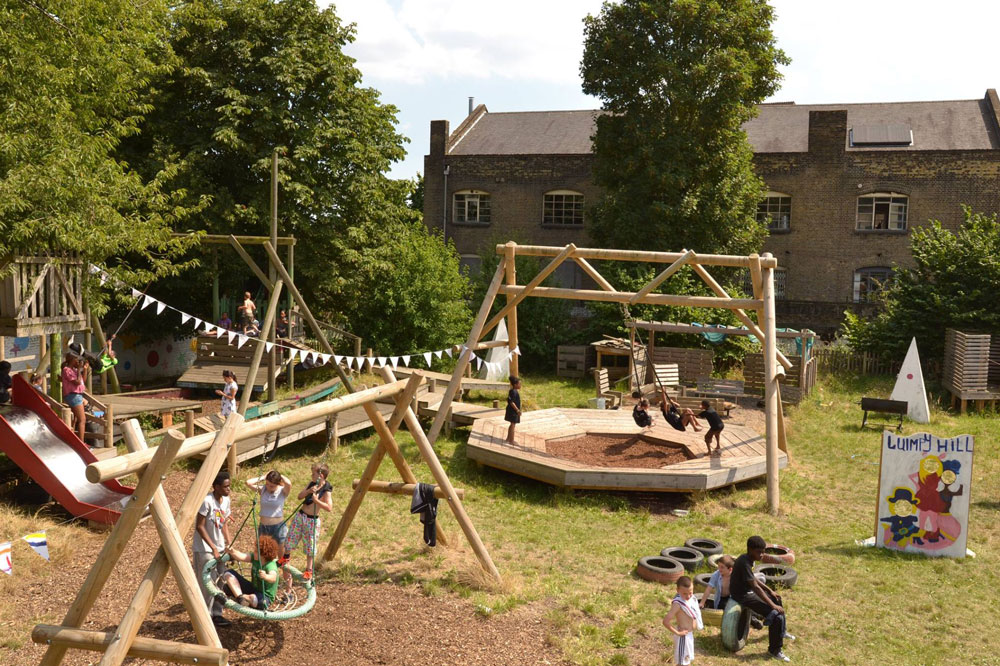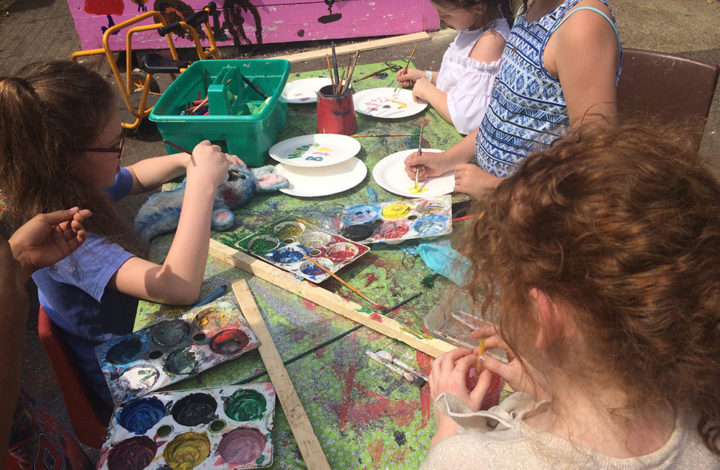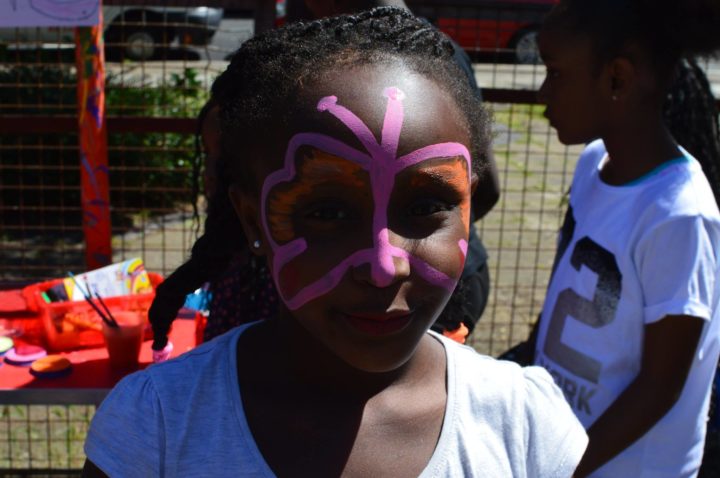
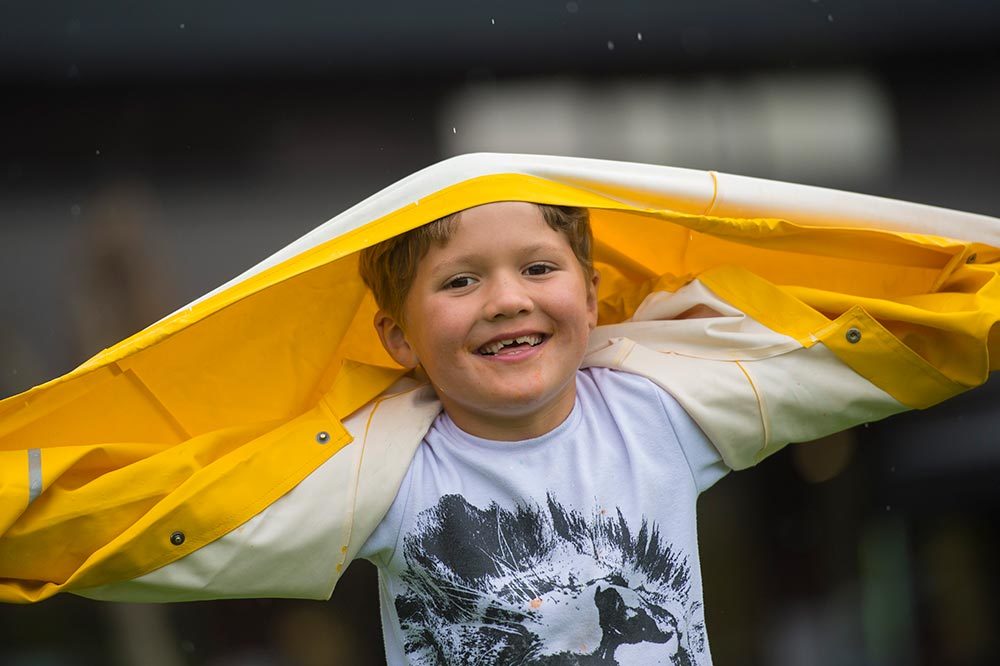
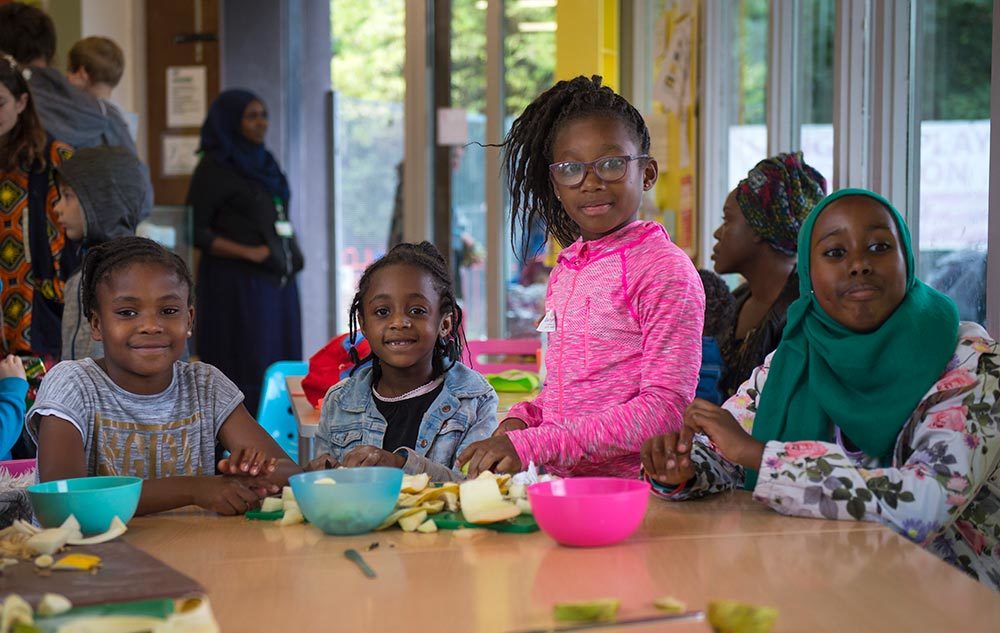
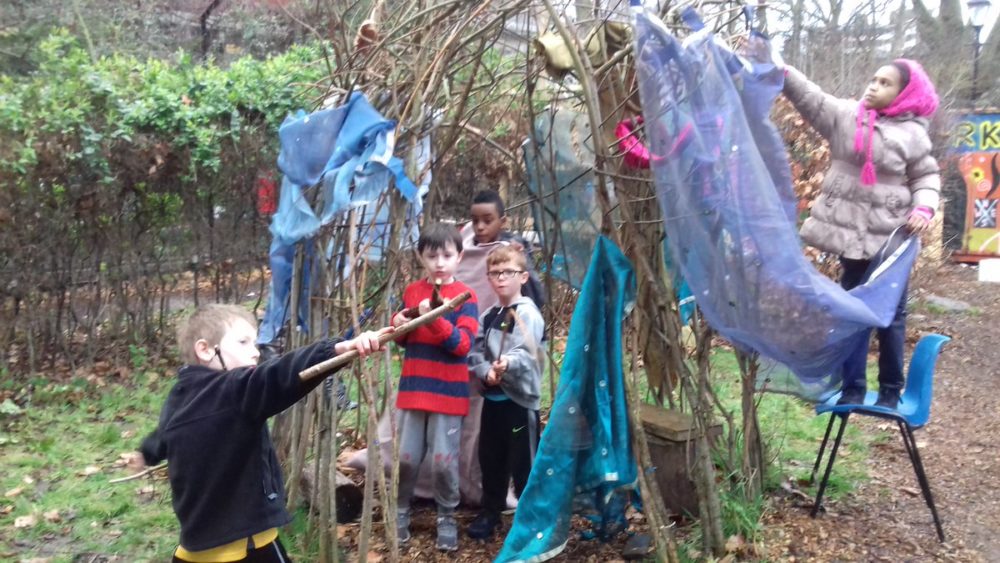
Play is what happens when children are given the space to be themselves and explore their world learning about what works and what doesn’t in pursuit of their own intrinsic aims. Children’s play time gets eroded and restricted through parental and societal fear for their safety, through focus on specific learned outcomes and through lack of free time and more and more often through use of screens – where the experience, although ‘fun’ is not conducive to unstructured play and often involves the participant in very specific actions for rewards.
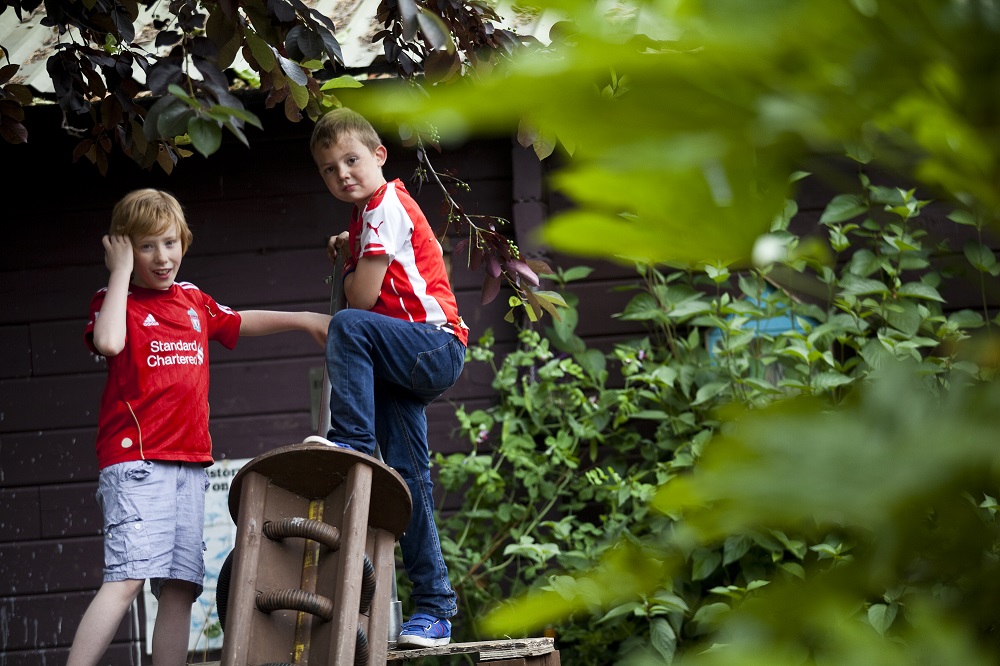
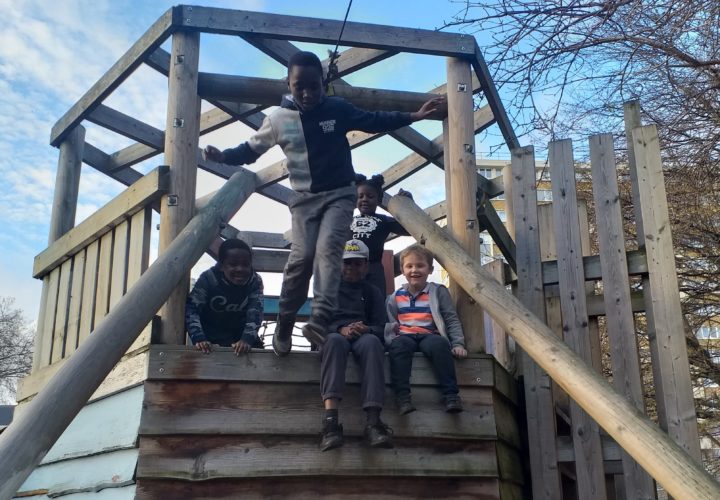
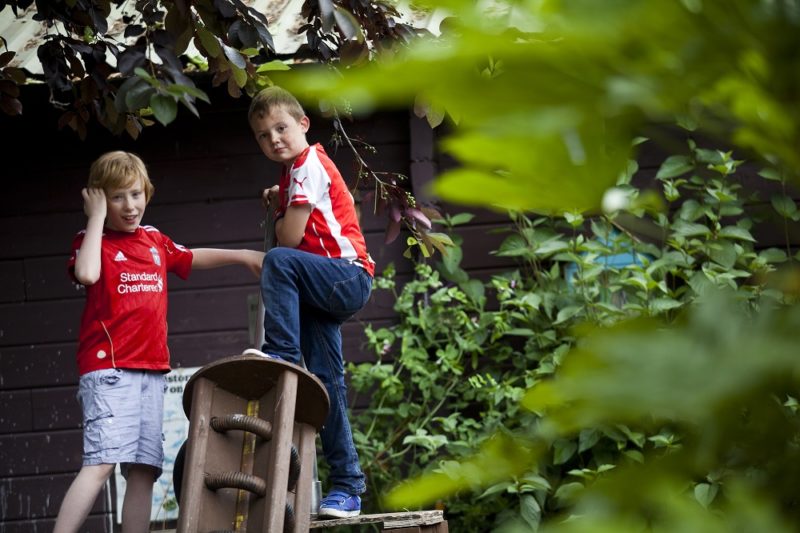
Photo: Two boys playing at Toffee Park Adventure Playground
The science bit
“Through play, children learn… about themselves, their relationships with others and the wider world… play and learning are not separate – play is part of learning and learning is part of play”.
– National Union of Teachers ratified in April 2015.
The decline in children’s opportunity to play in recent decades has been stark and largely attributed to increased parental fears of abduction, road accidents, crime and violence (Singer et al., 2009), as well as academic pressures (Gill, 2011).
Since the 1970s the distance children are permitted to roam away from home has decreased by 90% (Moss, 2012).
This play deprivation is linked with a number of negative outcomes including increased reports of issues in child and adolescent mental health (Twenge et al., 2000; Gray, 2011; Nuffield Foundation, 2013), with rates of adolescent self-harm seeing a 70% increase in recent years and rates of childhood depression and conduct disorders doubling by the end of the millennium (Young Minds UK, 2013).
In addition, links are made between the rising reports of childhood obesity and reduced play opportunities. The National Children’s Bureau (2013) reported that boys living in deprived areas with little or no access to outdoor play spaces are three times more likely to be obese than boys living in less deprived areas, with girls reported to be twice as likely.
Free play has been found to be more effective in halting weight gain in obese children than exercise and food programmes combined (Caterson & Gill, 2002). It is reported that 79% of boys and 84% of girls fail to achieve the recommended 60 minutes of physical activity per day (Health and Social Care Information Centre, 2013). Play is the most natural form of physical activity freely chosen by children.
Studies report that playing in nature has positive impacts on children’s sense of wellbeing and emotional resilience (Pretty et al., 2009). The Natural Childhood report (The National Trust: Moss, 2012) highlights the importance of nature as a basic human need and warns of the impact of the ‘Nature Deficit Disorder’ (Louv, 2005) that is resulting from children’s lack of exposure to the natural world.
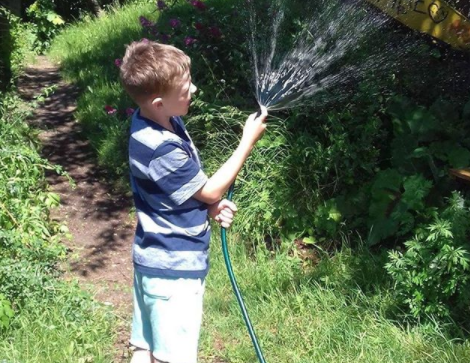
Watering plants at Crumbles Castle
Play is widely accepted as being integral to socialisation in children; teaching co-operation, empathy, and problem solving (Open University, 2011). This relationship is highlighted in studies of deprivation in orphanages (Chungani et al., 2001), with reports of significant gains in cognitive, motor, and social functioning following play interventions (Taneja et al., 2002).
The benefits of play are not confined to the realms of health and socialisation in children but also to that of academic and cognitive functioning (Hill et al., 2010; Biddle & Asare, 2011). Large scale research reports improved classroom behaviour for children who have at least 15 minutes of playtime during the school day (Barros et al., 2009; O’Connor & Stagnitti, 2011). Similar findings are reported in research with children who have been diagnosed with Attention Deficit Hyperactivity Disorder (Ridway et al., 2003), with other studies reporting an even more pronounced impact on such children (Taylor & Kuo, 2009).
Dr Rahanda Garby, CEO of The LEGO Foundation, recently stated in a Forbes article that “Play unlocks learning and developmental benefits that last a lifetime, and childhood presents a critical window of opportunity”.
References
- Biddle, S. J., & Asare, M. (2011). Physical activity and mental health in children and adolescents: A review of reviews. British Journal of Sports Medicine, 45(11) 886-95.
- Brussoni, M., Gibbons, R., Gray, C., Ishikawa, T., Sandseter, E. B. H., Bienenstock, A., … & Tremblay, M. S. (2015). What is the relationship between risky outdoor play and health in children? A systematic review. International journal of environmental research and public health, 12(6), 6423-6454.
- Caterson, I. D., & Gill, T. P. (2002). Obesity: Epidemiology and possible prevention. Best Practice & Research Clinical Endocrinology & Metabolism,16(4), 595-610.
- Chugani, H. T., Behen, M. E., Muzik, O., Juhász, C., Nagy, F., & Chugani, D. C. (2001). Local brain functional activity following early deprivation: A study of postinstitutionalized Romanian orphans. Neuroimage, 14(6), 1290-1301.
- Gill, T (2011) Free range kids: Why children need simple pleasures and everyday freedom, and what we can do about it. Dairylea: Cheltenham.
- Gray, P. (2011). The decline of play and the rise of psychopathology in children and adolescents. American Journal of Play, 3(4), 443-463. Retrieved from: http://www.journalofplay.org/
- Greve, W., Thomsen, T., & Dehio, C. (2013). Does playing pay? The fitness-effect of free play during childhood. Evolutionary Psychology, 12(2), 434-447.
- Taylor, F. T. & Kuo, F. T. (2009). Children with attention deficits concentrate better after walk in the park. Journal of Attention Disorders,12(5) 402-409.
- Louv, R. (2005). Last child in the woods: Saving our kids from nature deficit disorder. NY: Workman Publishing Company.
- Moss, S. (2012). Natural Childhood. National Trust, UK
- National Children’s Bureau (2013). Greater Expectations: Raising aspirations for our children. London: National Children’s Bureau.
- National Union of Teachers (2007). A time to play: NUT play policy, London: NUT.
- O’Connor, C., & Stagnitti, K. (2011). Play, behaviour, language and social skills: The comparison of a play and a non-play intervention within a specialist school setting. Research in Developmental Disabilities, 32(3), 1205-1211.
- Open University, (2011) Play, learning and the brain. Retrieved from: http://openlearn.open. ac.uk/mod/oucontent/view.php?id=397465&printable=1
- Ridgway, A., Northup, J., Pellegrin, A., LaRue, R., & Hightsoe, A. (2003). Effects of recess on the classroom behaviour of children with and without Attention-Deficit Hyperactivity Disorder. School Psychology Quarterly, 18(3), 253 -268.
- Singer, D.G., Singer, J.L., D’Agostino, H. and DeLong, R. (2009). Children’s pastimes and play in sixteen nations: Is free-play declining? American Journal of Play, 1(3), 283–312.
- The Health and Social Care Information Service (2013). Statistics on obesity, physical activity and diet England. London: NHS.
- Twenge, J. (2000). The age of anxiety? Birth cohort change in anxiety and neuroticism 1952 – 1995. Journal of Personality and Social Psychology, 79(6), 1007-1021.
- Young Minds UK, (2013). YoungMinds professionals: mental health statistics. Retrieved from: http://www.youngminds.org.uk/training_services/policy/mental_health_statistics